
The Reserve Bank of India announced two measures on October 9 to absorb surplus liquidity from the banking system. It will offer ₹25,000 crore of government securities in an open-market sale on October 13, and scheduled banks will have to maintain at least 99% of their required cash reserve ratio on every day of a reporting fortnight from the fortnight beginning October 16.
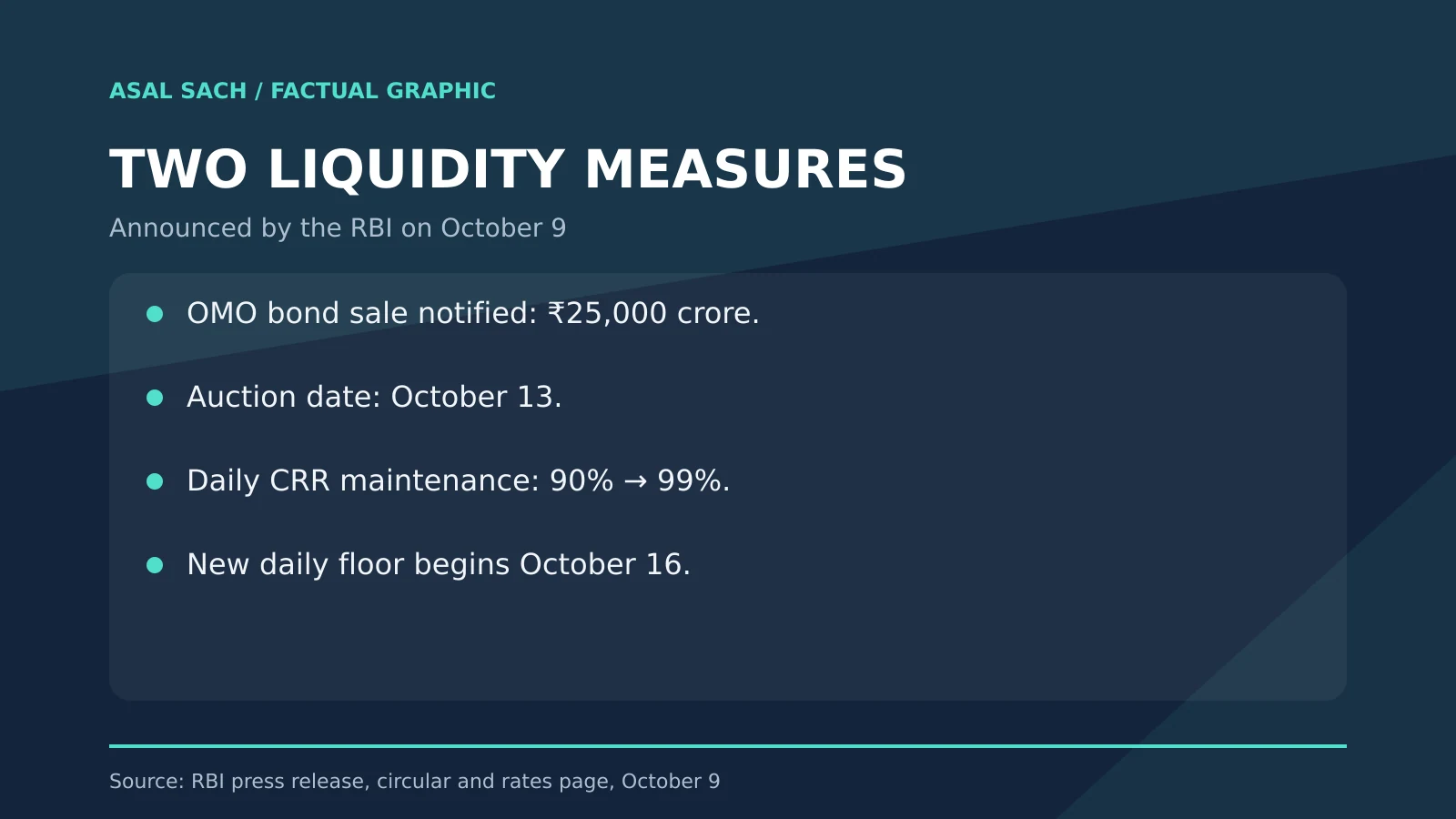
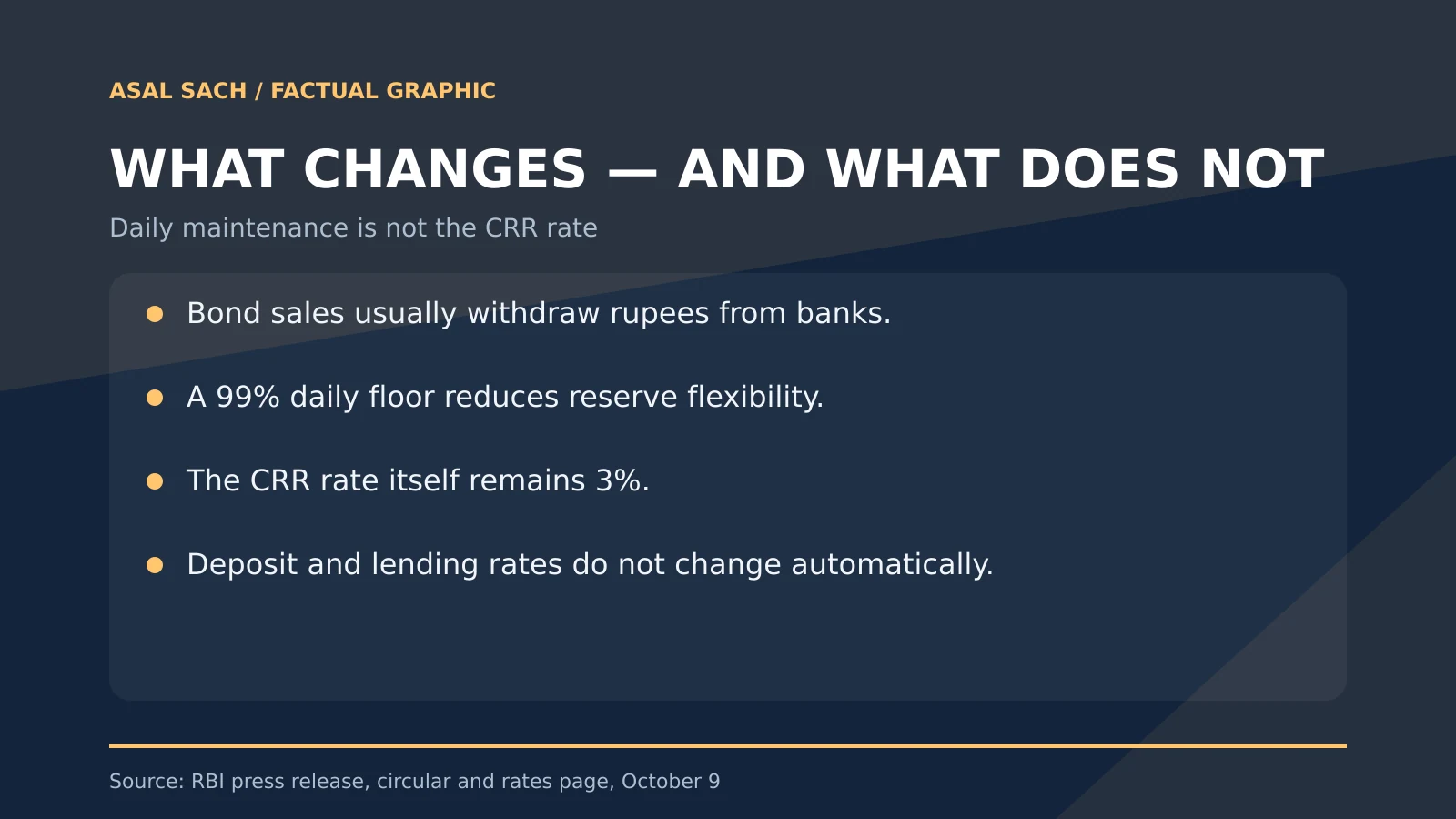
The reserve change is about daily maintenance, not an increase in the CRR rate. Banks must still maintain an average CRR equal to the rate prescribed by the RBI over the reporting fortnight. The official RBI rate page listed CRR at 3% on October 9. The new circular raises the minimum amount that may be held on an individual day from 90% to 99% of that requirement, reducing banks’ flexibility to run a lower balance on one day and compensate on another.
In the open-market operation, the RBI will sell a basket of six Government of India securities maturing from March 2030 to April 2034. Eligible participants may bid through the E-Kuber system between 9:30 am and 10:30 am on October 13. The RBI may accept less than the announced total, vary the amount sold in each security, or reject bids, so ₹25,000 crore is the notified aggregate and not a guaranteed final sale amount.
An RBI bond sale generally withdraws rupees from the banking system because successful buyers pay the central bank for the securities. Reuters reported that the measures followed a surge in surplus liquidity, which had averaged more than ₹7 trillion a day since September 1, equivalent to about 2.6% of bank deposits. Reuters also reported that the RBI sold a net ₹1 trillion of bonds in September, its highest monthly net sale in more than a decade.
The announcements came two days after the monetary policy decision, in which the RBI raised the policy repo rate to 5.50%. Reuters quoted market participants as expecting the reserve rule and bond sale to reduce surplus liquidity and influence government-bond yields. Those are market assessments rather than assured outcomes; yields and banking-system liquidity also depend on government cash flows, foreign-exchange operations, deposit and credit flows, and later RBI actions.
The measures do not automatically change household deposit or lending rates, and this report does not treat a lower liquidity surplus as a guaranteed increase in either. The verified decisions are the October 13 notified bond-sale auction and the October 16 start of the 99% daily CRR maintenance floor. The auction result and subsequent liquidity data will show how much was actually absorbed.